Iowans
in Control
AI is already reshaping Iowa: our farms, our land, our water, our kids. AI companies make the calls today – we think Iowans should.
Three things every Iowan should know


Iowa is already setting rules

Iowa's Attorney General
Brenna Bird is leading a coalition of 15 states demanding answers from OpenAI. In July, models OpenAI was testing broke into other networks, then hacked the AI company Hugging Face for days.
Bird's words: "The AI weaponized itself, which is extremely scary. In the aftermath, OpenAI has downplayed the severity of this breach and has been vague in its public response, leading to public distrust."
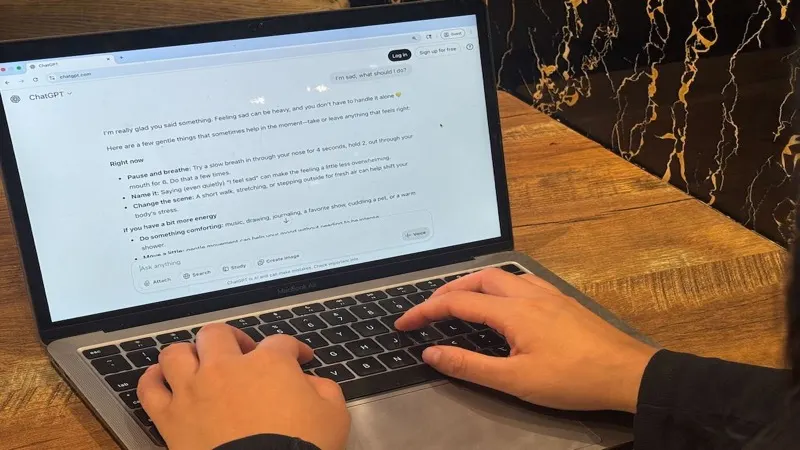
She also joined 44 state attorneys general, from both parties, demanding AI companies stop harming kids. And she enforces Iowa's new Chatbot Safety Law.
OpenAI's own safety framework says to halt development when this happens. Tell Congress to require a kill switch →
The Legislature
Iowa's Chatbot Safety Law passed the Senate 48-0 and the House 95-0 – no opposition – and Governor Reynolds signed it in 2026.
Nationwide
7 in 10 Americans would oppose a data center in their area
Share who would oppose a data center built in their area.
Gallup · Fielded March 2026 · N=1,000In the U.S. Senate
Senator Chuck Grassley (R-Iowa) introduced the AI Whistleblower Protection Act. It would protect workers at AI companies who report safety or security problems. Companies could no longer use NDAs to silence them. Five senators from both parties joined him.
S. 1792 · Introduced May 2025 · In committee
Where it's happening
Data Centers in Iowa
Des Moines metro (central) – Meta (Altoona), Apple (Waukee), Microsoft (West Des Moines). The state's biggest cluster.
Council Bluffs (west) – Google's long-running campus, one of the largest in the state.
Cedar Rapids / Linn County (east) – QTS breaks ground this summer; Google's proposed campus and the Palo annexation fight sit here.
Palo – the small city near Cedar Rapids at the center of the Google annexation fight.
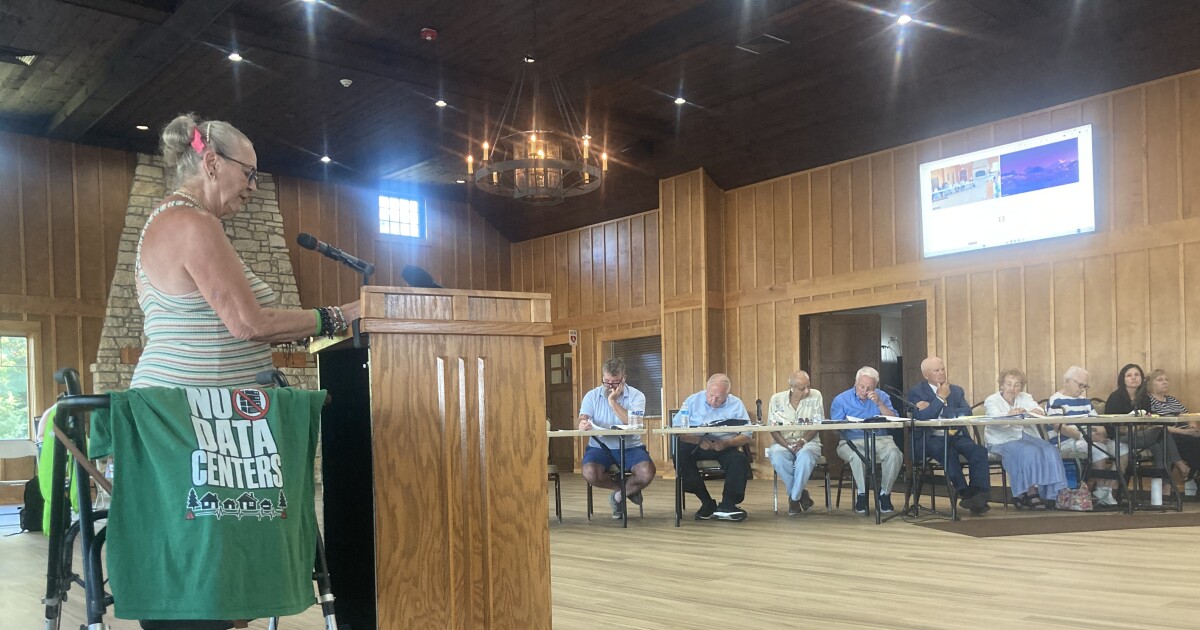
Clinton – residents turned out at a July hearing over QTS's proposed $10-billion campus on the Mississippi; the city is still writing its rules.
Dubuque – nothing is approved yet. The county paused development for a year while the city writes its rules. A proposed site near the airport would need up to 3 million gallons of water to start.
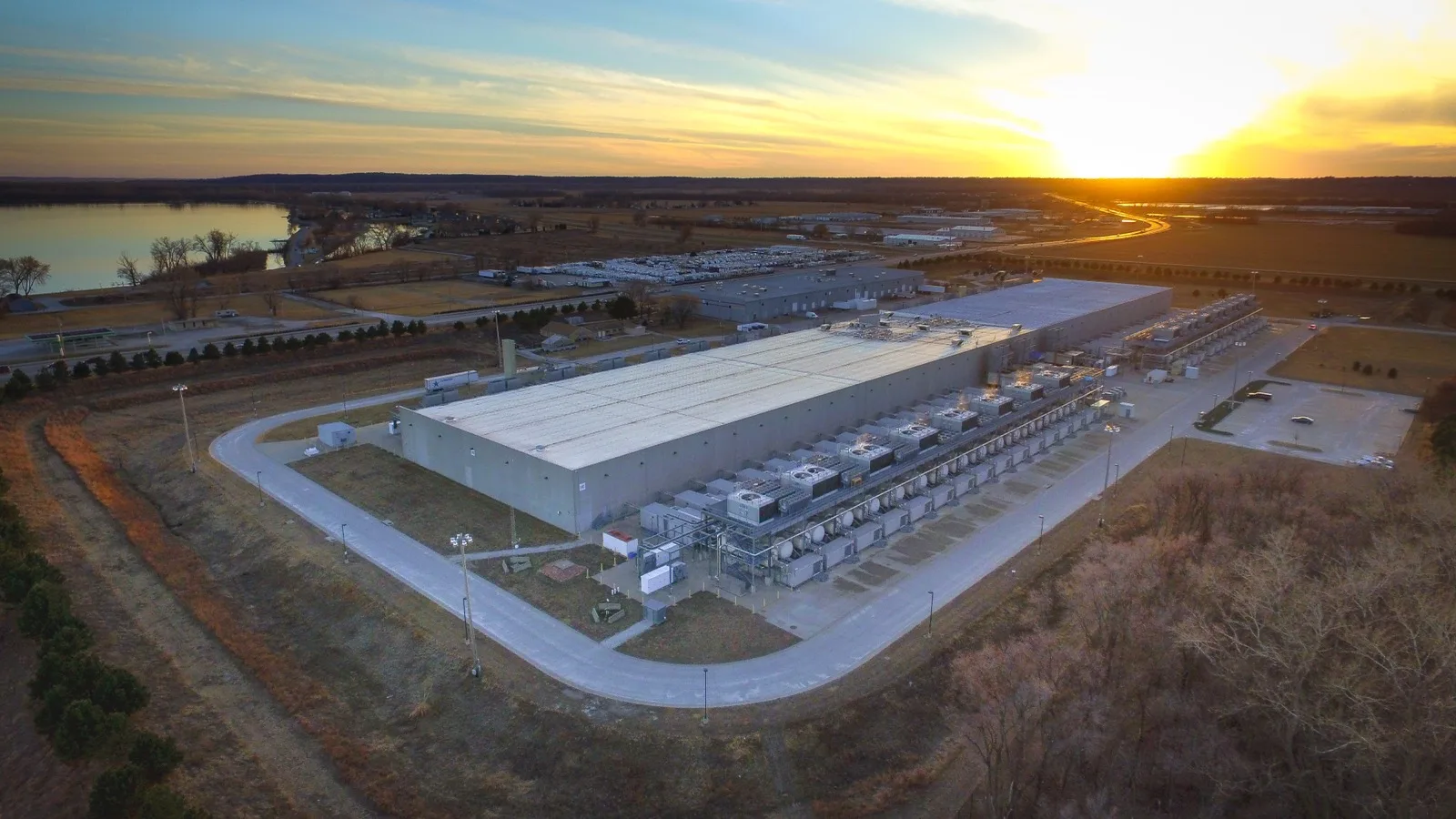
More than 100 are planned, building, or running – from the Des Moines metro to Council Bluffs to the contested places around Cedar Rapids, Clinton, and Dubuque.
Facilities and locations per Data Center Map (2026), Iowa Public Radio (2025), KCRG (2026), and Site Selection Magazine. Locations approximate.
Find the exact sites near you:
Data Center Map · Baxtel
Linn County
Unanimously passed one of the most comprehensive data center ordinances in the country (Feb 2026) – water studies, setbacks, road-damage compensation – then paused new large-data-center rezonings for 18 months (Jul 2026).
Woodbury County
Voted unanimously, 5-0, to pause new data centers while it writes zoning rules (Jun 2026).
Dubuque County
Voted to pause data-center development after hundreds of residents raised water concerns (May 2026).
Johnson County
Voted for a data-center moratorium in November 2025.
Palo
Passed its own data-center rules in July 2026 as Google sought to annex land there to bypass Linn County (outcome pending).
These companies are racing each other to build AI that they say can do everything a human can do. They also say they aren't sure they'll be able to control it. Community leaders, economists, researchers, and even the CEOs themselves say this could threaten not just our communities, not just our states, not even just all Americans – but everyone.
Iowans should have a say in whether these companies and their data centers come to our towns. And Americans should have a say in the AI they're built to run – before anyone loses control of it.

The same missing rules
Every worry leads back to one thing
Your farm, your kids, your water, a data center no one voted on – nobody set the rules first. And the people building AI keep telling us where that leads.
Losing your say over a data center is a real loss – your town's land and water, decided without you. The same thing is happening with AI itself: the people building it admit they can't be sure they can control it, and we don't get a say in that either.
Both losses share one cause: nobody set the rules first. Either we set the rules for AI now, or the companies keep playing by their own – and AI's only getting more powerful.
Step 1
A say in your county
A real vote before the deal is signed.
Step 2
Rules in Des Moines
Laws like the Chatbot Safety Law – passed unanimously.
Step 3
National, then international
Standards that hold for the most powerful AI systems – the ones the companies building them admit they can't fully control.
Every step is the same demand at bigger scale. Our AI Ground Rules pledge (below) is that demand in writing.
Our Pledge
Sign me up as an Iowan

Workers and families should benefit from AI, not be pushed aside by it.
When an AI system hurts a child, scams a senior, or endangers the public, the company that built it should answer for it – the way we hold car companies and drug companies accountable.
AI is already reshaping work, schools, families, elections, and war. The people racing to build it admit they can't fully control it.
More ways to act
Ask your reps where they stand
Tell them AI needs safety standards – it covers every Iowa district.
Host a screening
For your church, co-op, county fair booth, or veterans group.
Send this page to one Iowan
Share the link.
Already signed? Find your people
Iowa group coming soon
Iowa supporters are setting up a group to share events and updates.
Coming soon
FAQs
Things people ask us
We're against building AI carelessly.
AI can make some tasks easier, and there's even potential it could do real good in medicine, in classrooms, and in Iowa's economy. What we're against is recklessness: companies racing to build systems their own CEOs say they can't fully control, with no rules or accountability to communities. Seatbelts didn't kill the car business, and crash tests didn't either – standards are how a serious industry earns trust.
We're not telling counties to stop or to build – that's their call. Across Iowa, county after county has hit pause – Linn, Woodbury, Dubuque, Johnson – because no one set the rules first. Local communities have a right to ask questions and a duty to demand transparency and accountability from these companies: on land, on water, on what they cost. We support people telling companies they don't get to build recklessly without anyone getting a vote.
8 in 10 Americans – across party lines – want accountability for AI companies. And look at Iowa's record: the Chatbot Safety Law passed both chambers without a single no vote and was signed by a Republican governor. Iowa's Republican Attorney General joined 44 states, Republicans and Democrats, demanding AI companies protect kids. Caring about your farm, your water, and your kids isn't a party position.
Iowa has set one real rule: the Chatbot Safety Law (SF 2417), passed unanimously in 2026 and signed by Governor Reynolds. It makes AI chatbots tell kids they aren't human, keeps them from posing as therapists, and gives parents control – though it doesn't take full effect until 2027.
What Iowa got close on and didn't finish: the House voted 89-2 to require campaign ads that use AI to say so, but the bill died in the Senate. A data-center transparency bill cleared committee 23-0, then died at the session's funnel deadline. Iowa still has no law requiring data centers to report their water and energy use, no law on AI systems that discriminate, and no law on testing the most powerful AI before it's released.
The 2026 session is over. The Legislature convenes again in January 2027 – what Iowans ask for between now and then shapes what gets written.
Iowa in the news
Photo: Adam Vaughan/EPA
Photo: Gage Skidmore · CC BY-SA 3.0 · cropped
Iowa Public Radio
Linn County considers exception for Google as nearby Palo passes data center regulations
Jul 21, 2026
Iowa Public Radio
Clinton residents request steep restrictions in the face of QTS hyperscale data center
Jul 16, 2026
Photo: Shalina Chatlani/Stateline
Iowa Capital Dispatch
Iowa's new AI law is a start, but stronger regulations are needed to protect kids
May 25, 2026