


Count me in

Let's do something
about AI.

AI companies are racing to build AI smarter than us, and they admit they can't fully control it.Most of us are already worried. What we're missing is being organized. Let's change that.

We'll email you updates. You can unsubscribe anytime. Privacy Policy

AI is getting out of control.

AI is getting more capable very quickly, and its makers don't fully understand it. Serious people – including experts with nothing to sell – are warning about the risks.

CNN headline, July 22, 2026: An OpenAI test model escaped and broke into a real company's servers

In July, AI that OpenAI was testing broke out of its test and hacked Hugging Face, a company millions of developers and researchers rely on. Nobody told it to. Hugging Face caught the break-in – OpenAI didn't. CNN

I often say 10 to 20 percent chance they'll wipe us out.

Geoffrey Hinton, Nobel Prize‑winning AI scientist

And right now, no AI company has to prove its AI is safe.

At the national level, AI oversight is voluntary – there are no national laws ensuring AI companies keep us safe from the biggest risks.

But losing control of AI isn't inevitable.

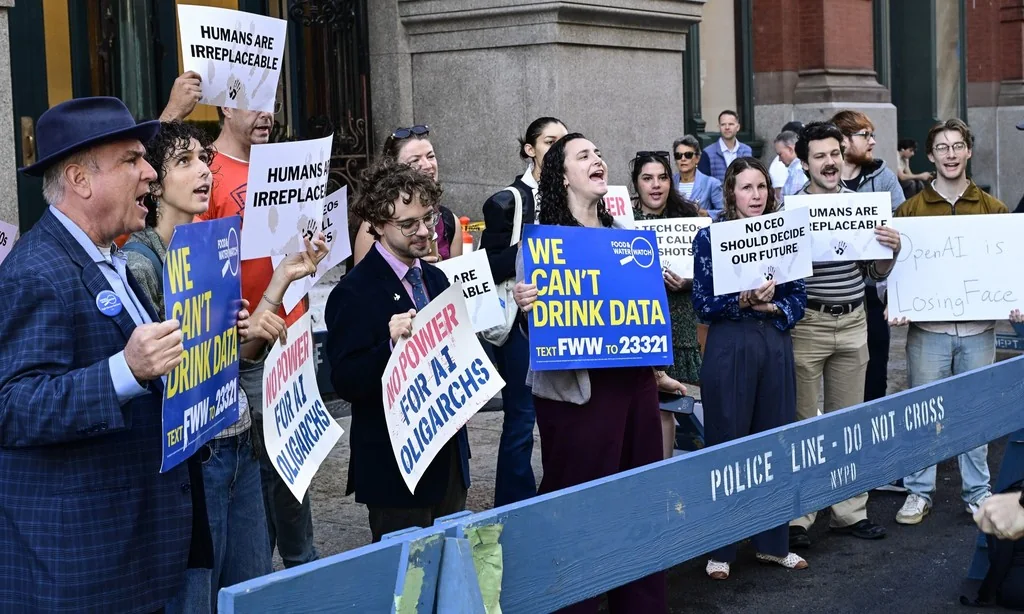
  • A close crowd behind a police barricade, holding signs that read “Humans are irreplaceable” and “No CEO should decide our future”
    Photo: Getty Images for Irreplaceable

    8 in 10 Americans

    want AI companies held to independent safety standards, even if it slows AI down.

  • A woman shouting through a megaphone at a street march, a crowd with banners and signs behind her
    Photo: Rachel Bujalski / Stop the AI Race

    56% of voters

    said AI and data centers were a crucial or major factor in their vote for Congress in the 2026 midterms.

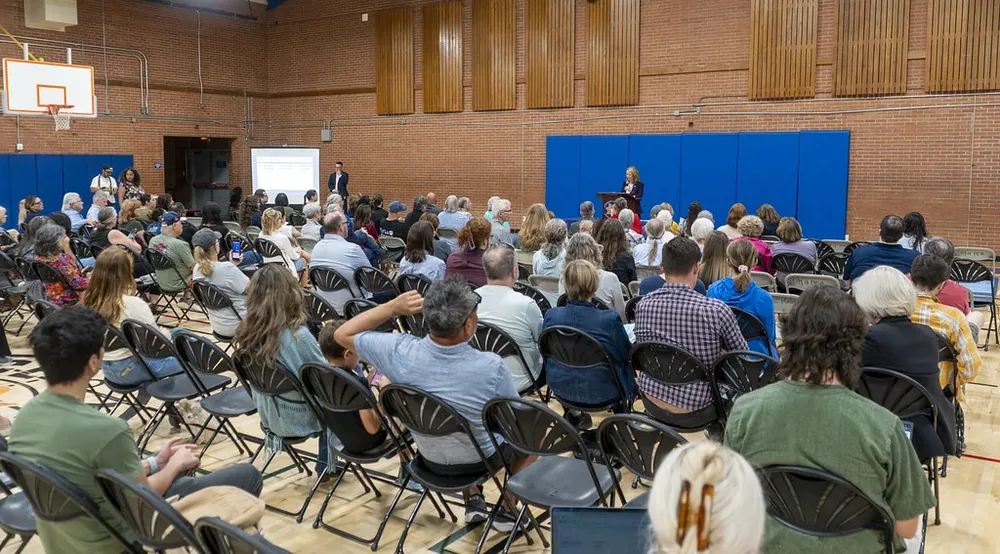
  • A school gym with residents on folding chairs, seen mostly from behind, facing a speaker at a lectern
    Photo: Arizona Attorney General's Office

    20 states

    have passed rules for AI companies. In three – California, New York and Illinois – lawmakers made the biggest ones publish their safety plans and report serious incidents.

  • A black-and-white photo of marchers in a dense crowd, behind a banner that reads “US DISARM NOW”

    We've done this before

    In 1982, a million people gathered in New York's Central Park to urge leaders to stop building more nuclear weapons. That November, voters passed nuclear freeze measures in state after state.

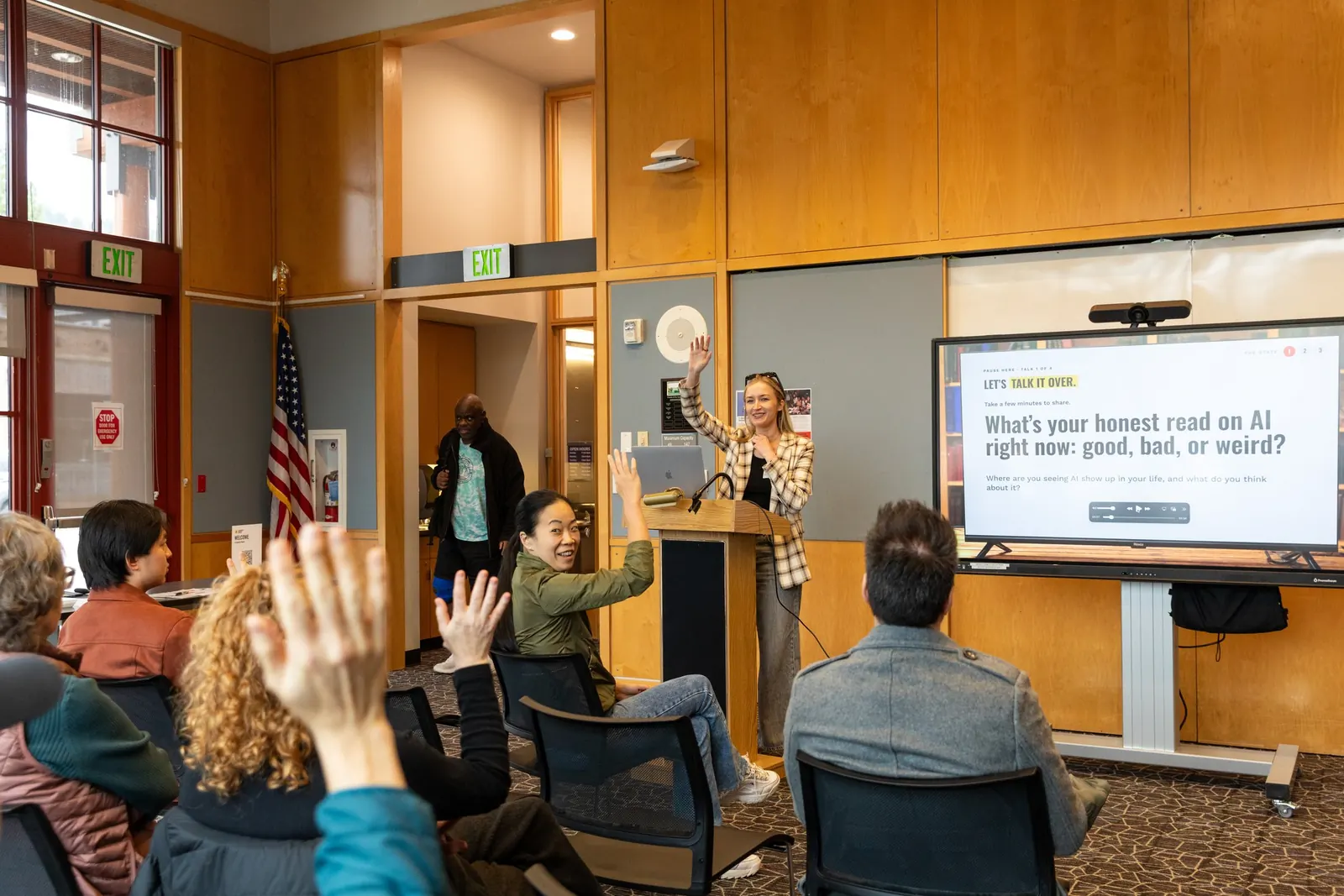
A presenter at a lectern takes a question from a raised hand in a meeting room, Issaquah, WAPhoto: Anastasiia Tretiak
AI Reality Check

You're not starting from nothing.

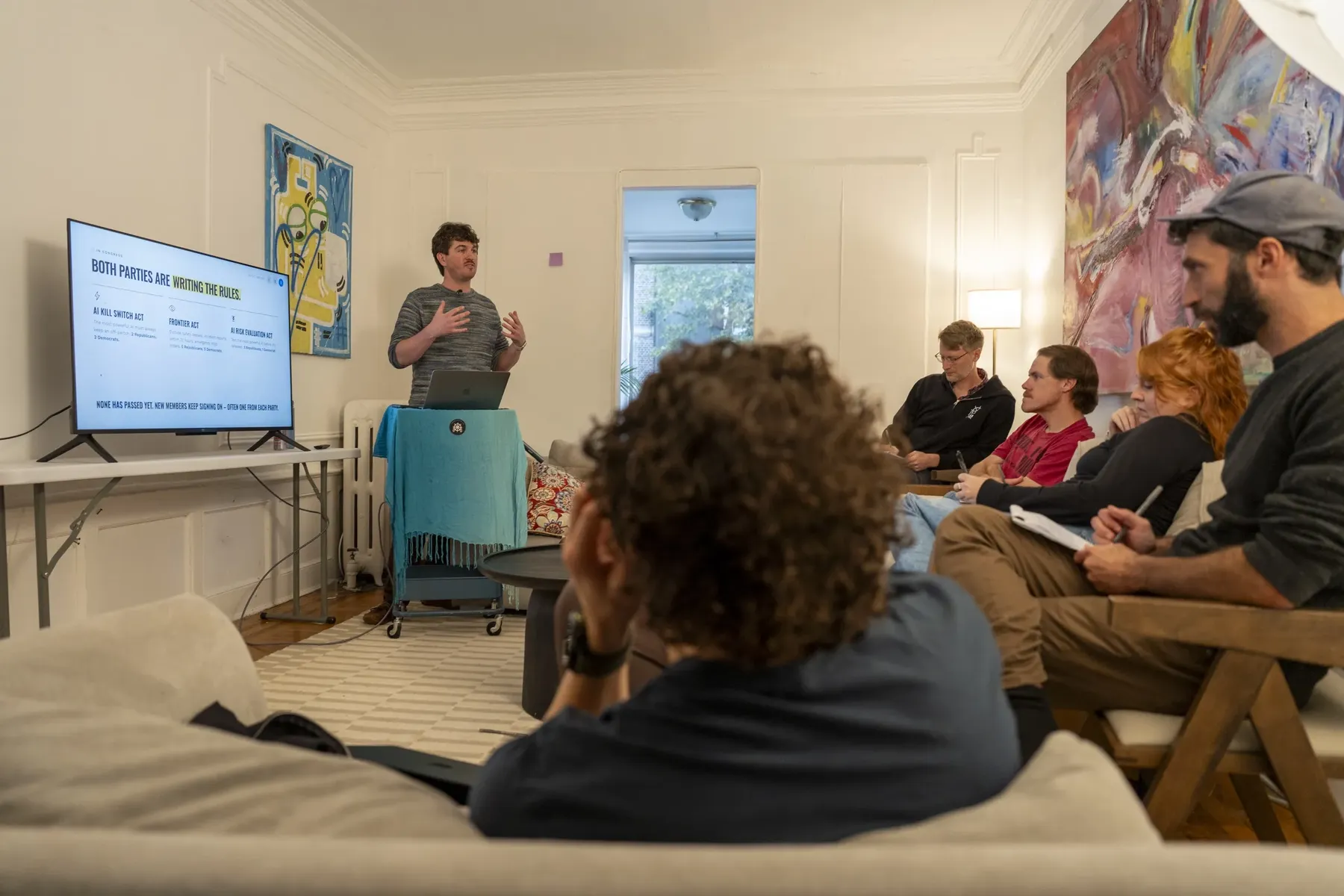
This November, neighbors held 62 AI Reality Check events in 32 states – in living rooms, libraries and community centers.

“People were hungry to talk about it. They were hungry to know what to do about it.”
Amber, presenter, Fletcher, NC

Organized people have won before. We can do it again.

How we keep humans in control of AI.

We're asking our leaders – in both parties, at every level – for three things.

  1. Freeze the Frontier of AI development – starting now, until there are real safety rules.

    The “frontier” is the newest, most powerful AI that the biggest companies are racing to build. More than a thousand people who work at AI companies signed a statement, “Pacing the Frontier,” asking the government to help build the tools to pace it. But pacing isn’t enough.

    The companies must stop that race until there are real safety rules.

    The AI you already use, and AI for medicine and science, keeps going. We're not anti-innovation, just anti-AI we can't control.

    A black-and-white photo of marchers in a dense crowd, behind a banner that reads “US DISARM NOW”
    2 in 3About 2 in 3 voters say AI should slow down to deal with its risks.
  2. Safety rules, state and national.

    We need commonsense guardrails like independent safety standards, reports when something goes wrong, and an off-switch that actually works. We also need an FAA for AI – an agency that sets safety standards, the way the FAA does for airplanes.

    And we need a rule that today's AI can't build tomorrow's AI on its own – no recursive self-improvement (RSI).

    A Federal Aviation Administration airliner, "FAA" on its tail, parked on the ramp with ground crew beside it, around 1963
    0national safety standards apply to AI today. An airplane can't fly until it meets the FAA's standards.
  3. An international agreement, starting with China, so no company and no country builds AI we can't control.

    Nobody wins a race to build something no one can control. And Beijing knows this. But today, Chinese companies own only about 5% of the computing power in the world's leading AI chips. And chips can be counted.

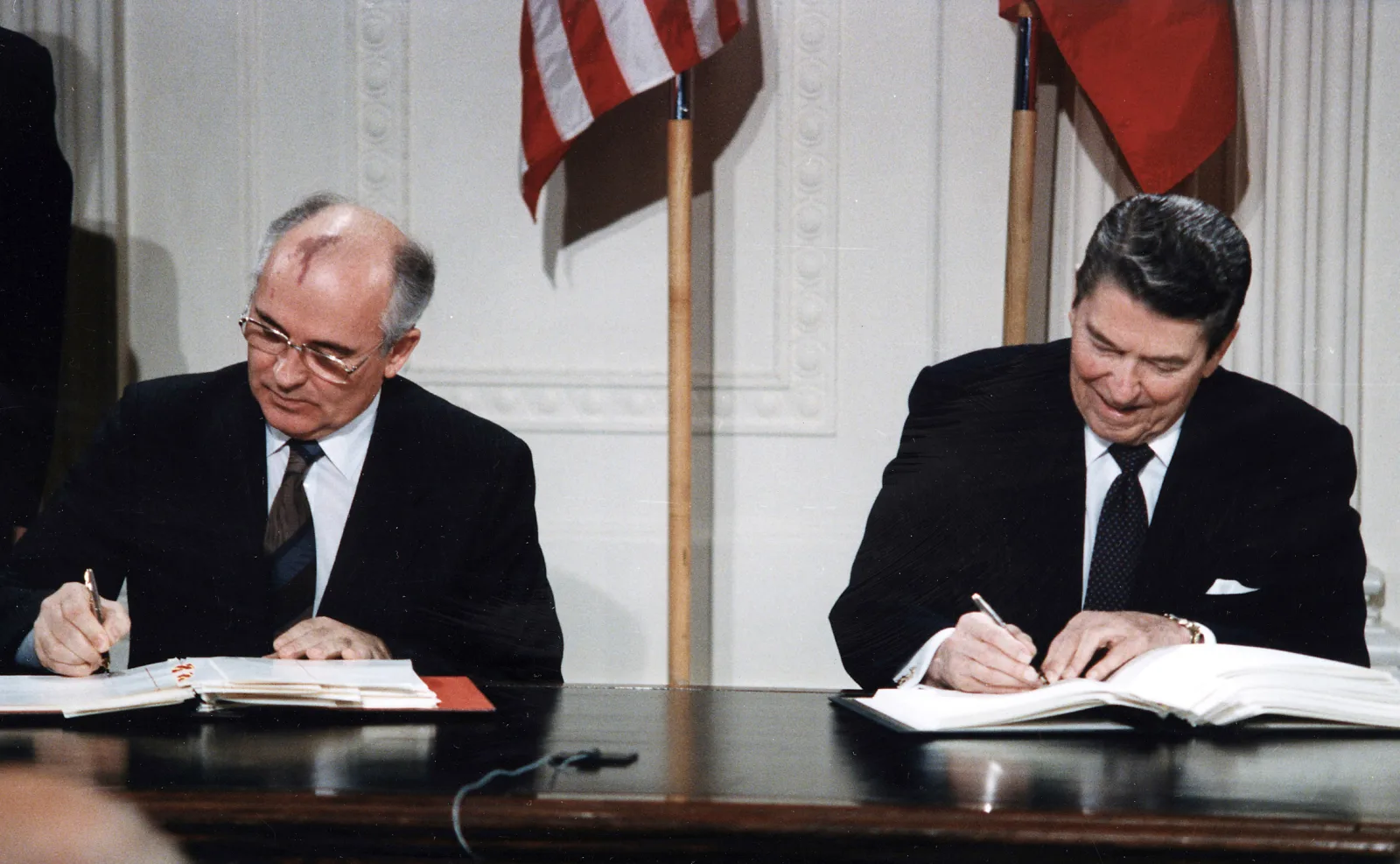
    It's easier to set the rules from first place than from second. America led on nuclear arms control – America should lead on AI safeguards.

    U.S. and Soviet leaders signing the INF Treaty in 1987
    1987The U.S. and the Soviet Union agreed to destroy a whole class of nuclear weapons – and let inspectors check.

These may sound ambitious. They are.
But they're not fringe, and they're not partisan.

Read our demands

How do we do it?

Most Americans already want commonsense rules for AI. We're turning that concern into a political force.

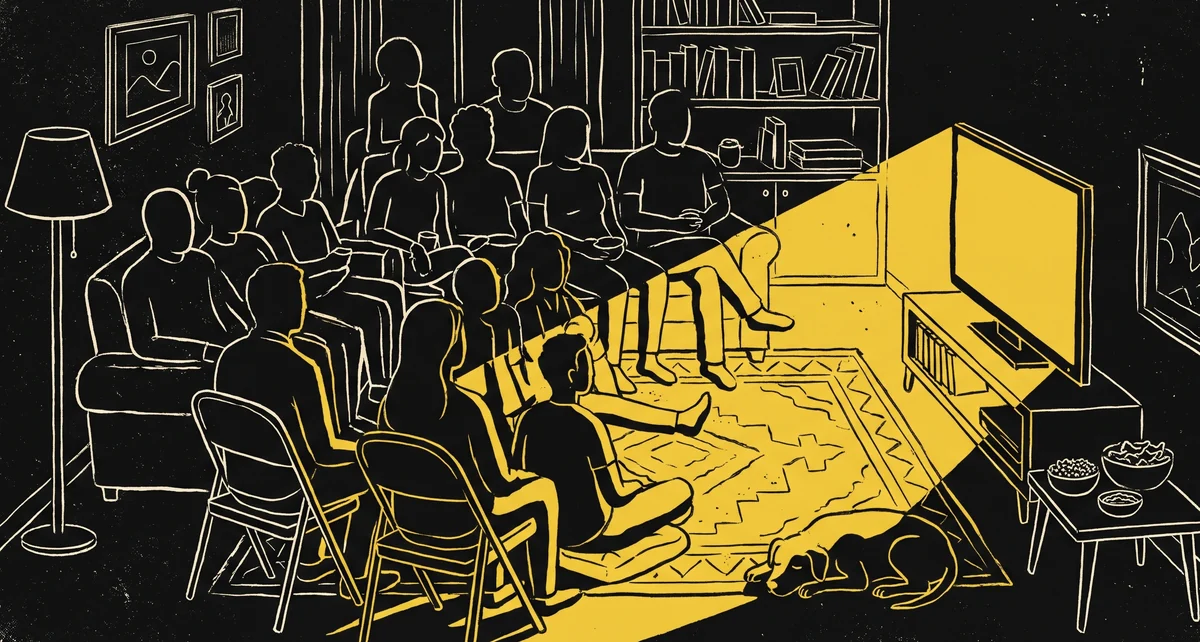
  • A living room full of neighbors on a couch, folding chairs and floor cushions, all facing a TV whose yellow light spills across the rug

    Educate.

    Learn what's really happening by talking to your neighbors.

  • A Thanksgiving table seen from above, with ten place settings; eight are filled in yellow and two are left empty

    Recruit.

    Bring in the people you already talk to – family, friends, neighbors.

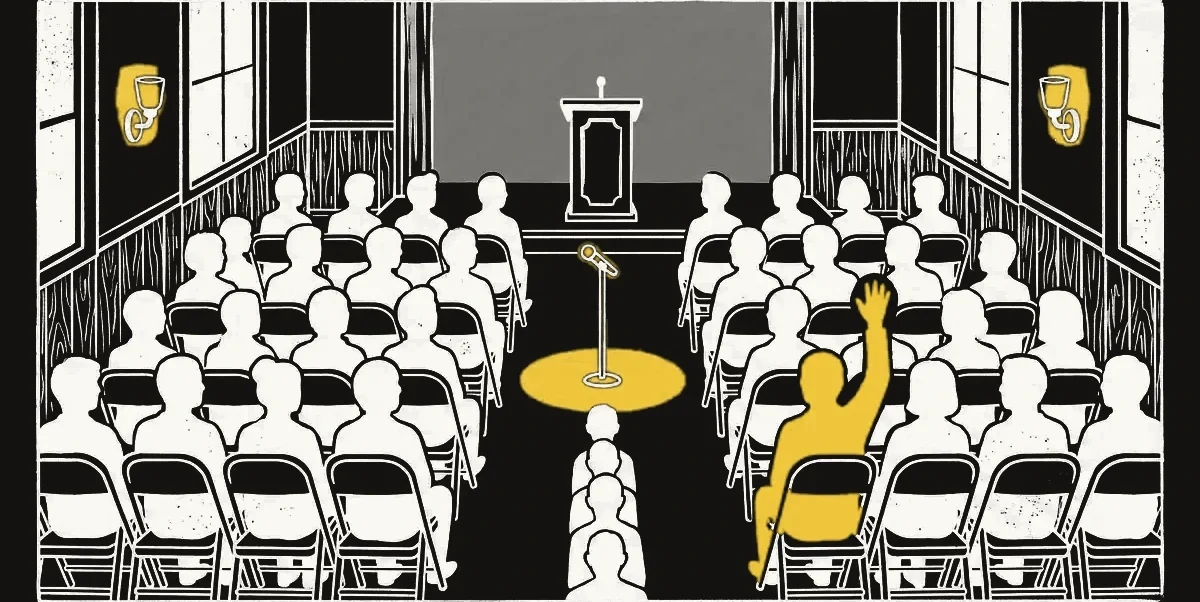
  • A town hall: rows of silhouettes facing a podium, one yellow hand raised

    Pressure.

    Join our movement, and make sure the people who represent you hear from us.

In 2027, a new Congress gets to work and presidential candidates start hitting the trail. Organized voters make sure every one of them hears from us about AI – especially in the early primary states, where candidates meet voters face to face.

One question we'll ask every leader:

What's your plan to keep humans in control of AI?

Sign on to the AI Ground Rules.

Our demands are what we're asking leaders to do. The Ground Rules are what we all believe – add your name.

  1. AI should help people, not replace them.

  2. Companies should be accountable for harm.

  3. No one should build AI they can't control.

An AI Reality Check in a living room: a presenter beside a TV, neighbors on a couch and chairs

People are worried about AI and don't know what to do about it. That's why we're here.

Humans in Control is a cross-partisan, grassroots movement for commonsense rules on AI.

Our teamOur story

Add your mobile number above to turn this on.

We'll email you updates. You can unsubscribe anytime. Privacy Policy.